Please ensure Javascript is enabled for purposes of website accessibility

Category: Physical Therapy

  • Crossfit Dynamic Warmup Moves

    Crossfit Dynamic Warmup Moves

    If you are planning on doing a high intensity workout such as crossfit or HIIT training, it is important to incorporate a dynamic warm up to the muscle groups and joints you are about to use. A dynamic warm up is one that will elevate your heart rate, could involve large and small movements and mimics movements similar to what you will be doing in your workout. 

    Some of the benefits of a dynamic warm up include:

    • Injury Prevention
    • Improves blood flow to the muscles you will be exercising
    • Improves range of motion by increasing joint mobility and muscular flexibility

    Your CrossFit warm up should take anywhere from 5-15 minutes. Many “crossfit/HIIT” style workouts involve whole body movements which is why developing a warm up routine that targets the whole body is key! 

    The most common body parts to target during a Warm up for crossfit style workouts are:

    • Spine 
    • Shoulders
    • Hips 
    • Knees 
    • Ankles 
    • Wrists 

    Try adding theses movements to your warm ups: 

    Move 1: – Around The Worlds 

    How does this move help?

    This move helps to improve range of motion at your shoulder joint and will be beneficial for warming up any overhead movements. 

    Tip: Try not to move your head or neck, start with a wide grip on the bar and progress to a more narrow grip as your shoulders loosen up 

    Move 2: – Shoulder pass throughs

    How does this move help?

    This move helps to improve range of motion at your shoulder joint and will be beneficial for warming up any overhead movements. 

    Tip: Try not to move your head or neck, start with a wide grip on the bar and progress to a more narrow grip as your shoulders loosen up 

    Move 3- Inch Worms 

    How does this move help?

    This move stretches the hamstrings, increases spinal mobility, increases blood flow to shoulders, elevates heart rate. 

    Tip: Make sure you’re core is staying engaged when walking your hands out in front of you 

    Move 4- Lunge w/ shoulder flexion and thoracic extension 

    Crossfit Dynamic Warmup Moves Physical Therapy

    How does this move help?

    This move works to improves hip/ knee/ankle mobility, improves blood flow to legs.

    Tip: To make this dynamic, try walking lunges  


    Move 5- High knees & Butt Kicks 

    How does this move help?

    This move is a great warm up movements for workouts involving running or jumping and elevates heart rate. 

    Move 6- Plank into hip flexion w/ thoracic rotation 

     plank into hip flexion with thoracic rotation


    How does this move help?

    This move works to activates your core, improves hip mobility, improves spinal mobility. 

    Tip: Drop the back knee as a modification, think about rotating your chest up and looking up towards ceiling when doing twist, keep front knee in line with big toe

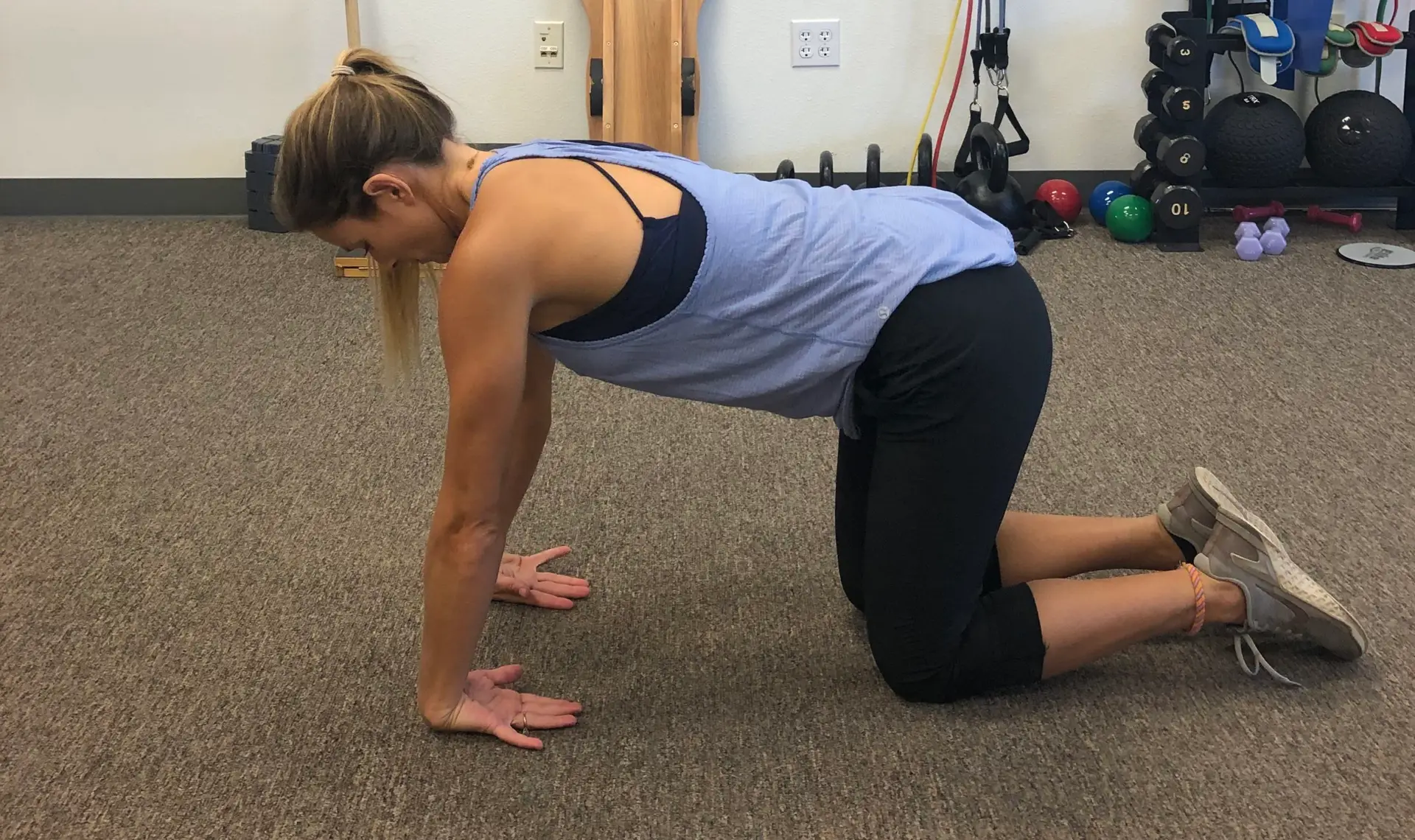
    Move 7- Weight bearing wrist stretches 
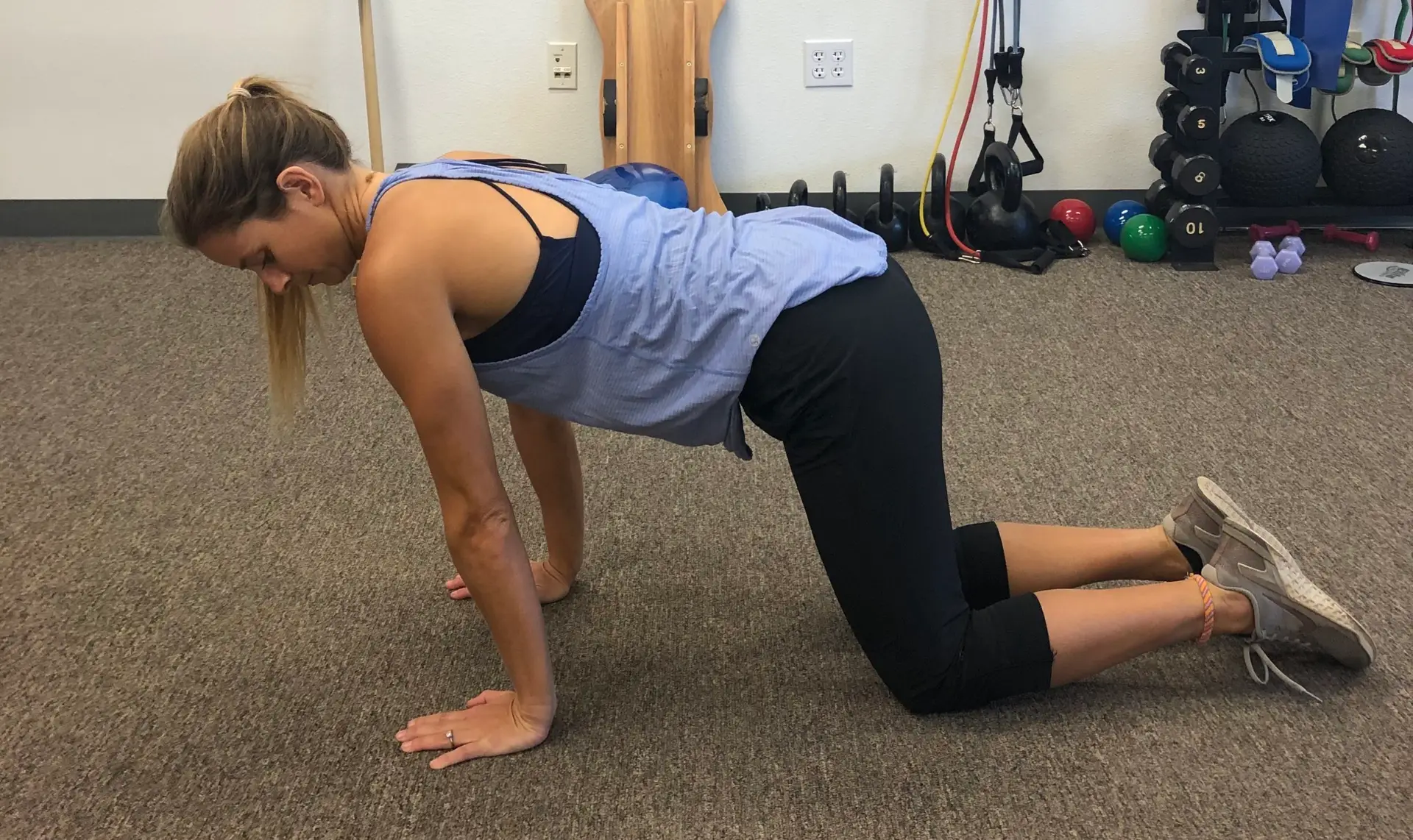
    How does this move help?

    This dynamic move stretches wrist joints and forearm muscles, useful when doing movements that have high requirements for wrist mobility/stability such as front squat, overhead squat, wall balls, snatch, planks, etc.   

    Tip: Rock forward and back gently, position your hands as shown in the pictures 

    It is important to note if you have pain doing any of these warm up movements. There is a difference between a “stretch” which may feel mildly uncomfortable vs pain that requires you to change how you move or stop what you’re doing all together. Our staff at Therapydia are all trained to assess movement and address pain, dysfunction and decrease risk of further injury! Do not hesitate to contact us if you have any issues. 

  • Four benefits of having in-home physical therapy services near you

    Four benefits of having in-home physical therapy services near you

    Many people can benefit from physical therapy treatment for chronic pain or injuries, but not everyone has the ability to travel to receive treatment. If you fall under this category, then you should check out in-home physical therapy services.

    In-home physical therapy services are offered by physical therapists who can come visit your home and provide treatment there instead of having you come to the clinic. Take a look below to learn more about in-home physical therapy and the benefits it can offer you.

    Four benefits of in-home physical therapy services

    1. Safety — It’s safer to stay home and not drive or deal with public transportation when you have certain injuries or chronic conditions. Physical therapists can come to you instead so you don’t have to face the risks of traveling.
      Additionally, during times of pandemic like COVID-19, in-home physical therapy limits your exposure to viral threat. Our physical therapists are always carefully screened before each shift to ensure they won’t pose a health risk to you.
    2. Convenience — In-home physical therapy requires little effort from you. All you need to do is make sure you’re ready for your appointment time, dressed in comfortable, loose clothing, and have a clean, open space.
    3. Effectiveness — In-home physical therapy services can be used to treat many of the same conditions that physical therapists can treat in a clinic. Physical therapists can bring much of the same equipment and tools they would use in the clinic to treat you in your home.
    4. Affordability — In-home physical therapy is covered by most major insurance providers and Medicare if you qualify for it. Talk to your insurance provider or physical therapist about your insurance options to make sure you qualify.

    Talk to Border Therapy Services to schedule in-home physical therapy service

    Our physical therapists are passionate about helping you get the treatment you need to live a better quality of life. If you can’t come to see us at one of our clinics, then we are ready to come to you in your home. Contact our team today for more information about in-home physical therapy services or to schedule an initial appointment.

  • What to expect from an in-home physical therapy appointment

    What to expect from an in-home physical therapy appointment

    Choosing an in-home physical therapy appointment has many advantages, especially during this season. Whether you are recovering from an injury that makes leaving the house difficult or you have a compromised immune system that makes you more susceptible to illnesses, in-home physical therapy services allow you to receive the treatment you need from the safety of your own home. 

    If you are concerned about going into a physical therapy clinic during this time, in-home physical therapy sessions are a great option to make sure you don’t lose the progress you’ve gained toward healing. 

    While there are a few things that may be different about an in-home appointment compared to an in-clinic one, most things will remain the same. Our physical therapists will bring the necessary equipment for your appointment.

    Considerations for in-home physical therapy sessions

    To ensure that you are getting the most out of your in-home physical therapy appointment, consider these following tips prior to your session:

    • Clear a space in a common area where you and your physical therapist can work through stretches and exercises safely.
    • Wear appropriate, comfortable clothes that you can move and stretch in.
    • Have a glass of water available, so you don’t have to break momentum to go to the kitchen.
    • Wear comfortable, athletic shoes to maintain the proper foot support during your appointment.

    Your physical therapist will bring the equipment needed for your appointment, so don’t worry about buying anything. All you need to do is have a space to work in and comfortable clothes to stretch in. Your physical therapist will do the rest. 

    Find an in-home physical therapy service near you

    At Franklin Rehab, we offer in-home physical therapy appointments to help patients who are unable to come into the office. Our team is dedicated to working with you during your healing process, which means bringing our services to you when it’s more convenient for you.

    If you’re interested in learning more about our in-home physical therapy services, contact our team today and we can connect you with one of our at-home physical therapy teams nearest to you, no referral required for most insurances!

  • Hip arthritis treatment — why physical therapy?

    Hip arthritis treatment — why physical therapy?

    Since it is so closely related to the natural aging process, arthritis of the hip is not a curable or reversible condition. This makes the primary goal of hip arthritis treatment managing symptoms and maintaining quality of life. With the main symptoms being aches, pains and stiffness, physical movement can become extremely difficult, but it’s important to stay active and mobile if you have been diagnosed with this condition. 

    This is where physical therapy comes in as a hip arthritis treatment. Working with a physical therapist can help you improve function and range of motion in the hips while reducing pain and inflammation. To give you a deeper understanding of what to expect from physical therapy and what the potential benefits are, we’re sharing the following information. If you have any questions or would like to learn more, don’t hesitate to reach out to us. 

    Seeing a physical therapist for hip arthritis treatment

    While arthritis is not curable due to the inability of our joints to regenerate cartilage, physical therapists are trained in a number of techniques that are designed to work against the effects of joint degeneration and inflammation. These include: 

    • Manual therapies, including joint and soft tissue mobilization
    • Trigger point therapy, to break up painful bundles of tissue
    • Posture training, to more evenly distribute weight throughout the hips
    • Strength and stability exercises, to relieve pressure on the hip joints

    Everyone is different, so finding the right course of treatment should be seen as a collaborative effort between patient and therapist. A great way to help is keeping a symptom and treatment journal that can yield important information to your therapist about your progress. 

    Hip arthritis treatment at Back in Motion 

    Our team of clinicians has more than seven decades of combined experience in treating a wide range of musculoskeletal conditions, including arthritis of the hip. When you come to Back in Motion, you can expect one-on-one care, individualized treatment plans and a caring staff who will work to understand your needs so you can maintain a healthy and active lifestyle. 

    Contact us today to start your treatment journey. Our front desk coordinator will help you make your initial appointment at the clinic that is right for you. 

  • What’s the best treatment for fibromyalgia?

    What’s the best treatment for fibromyalgia?

    Fibromyalgia is a condition that doctors define as having chronic pain at 11 of 18 predetermined points in the body. It’s also a fairly common issue since this condition is estimated to affect up to 12 million Americans. 

    If you’re one of the people with this condition, you might be wondering what the best treatment is for fibromyalgia. Physical therapy can offer benefits to patients with this condition. It can also be combined with other treatment options to create the most effective treatment plan for your fibromyalgia. 

    What therapy techniques are the best treatments for fibromyalgia?

    Physical therapists are trained in the use of evidence-based therapy methods. Several of these methods can help patients with fibromyalgia. Some of the best treatment techniques therapists offer for fibromyalgia include: 

    • Manual therapy — This technique relies on the therapist’s hands to provide therapeutic pressure to fibromyalgia pain points. It can also be used to loosen up stiff joints and reduce tension in soft tissue trigger points. One study shows that a type of manual therapy called spinal manipulation helps reduce pain significantly in fibromyalgia patients. It also reports that this therapy method led to improved sleep quality and fatigue levels. 
    • Aquatic therapy — Warm pools are typically used for a therapy technique called aquatic therapy. Aquatic therapy sessions involve performing various exercises and movements in the pool. The fact that water has a natural buoyancy helps reduce the force these movements place on the body. A medical study on fibromyalgia reports that patients had a seven-point decrease in pain on a scale of 1 to 100 after using aquatic therapy. Additionally, the study reports that this technique led to a 27% decrease in stiffness and a 37% increase in muscle strength.
    • Kinesio Taping® — This therapy method involves applying specially designed tape to various parts of the body. The tape is designed to lift the skin upward, which can help improve blood flow in the problem area. At the same time, it provides support for painful or injured body parts. One study used Kinesio Taping® on the torsos of people with fibromyalgia. As a result of this treatment, patients experienced reduced pain and better shoulder and neck comfort. 

    Excel Sports & Physical Therapy can help you find the best physical therapy treatments for fibromyalgia

    You don’t have to look far to find the best therapeutic treatments for fibromyalgia. Our team at Excel Sports & Physical Therapy is ready to provide the therapy you need for this chronic pain condition. We offer free screenings at our 11 clinics in the St. Louis, Missouri, area. Your screening allows us to learn how fibromyalgia is affecting you. This information is then used to build a personalized, multitechnique treatment plan for you. 

    Contact our team today for more information about how we can treat your fibromyalgia or to schedule an initial appointment. 

  • Pelvic floor therapy exercises with a professional

    Pelvic floor therapy exercises with a professional

    Issues such as pelvic pain and incontinence can have a severe effect on your quality of life. One of the most common causes for many people is myofascial pain in the pelvic floor muscles. This can be related to childbirth, injury or natural age-related changes, but according to Harvard Health, it very often goes undetected due to the difficulties in performing an examination in this area. 

    Once it is diagnosed, pelvic pain can be effectively treated with a method known as pelvic floor therapy. The overall goal is to strengthen and stabilize the pelvic floor and release myofascial tension that can be the source of pain. By working with a professional therapist who can provide guidance on pelvic floor exercises and other treatments, patients can give themselves the best chance of finding lasting relief from myofascial pain. 

    Working with a physical therapist for pelvic floor therapy

    Professional therapists trained to deliver pelvic floor therapy will have a deep understanding of the structure and mechanics of the pelvic floor. By performing a thorough evaluation that includes reviewing medical history, asking questions about specific symptoms and assessing the area with a hands-on examination, your therapist can recommend the pelvic floor exercises that are right for you. 

    Specific exercises vary, but can include: 

    • Expansion and contraction of pelvic floor muscles
    • Active and passive stretches in the pelvic area
    • Strengthening exercises for surrounding areas, such as the core and buttocks, that also work the pelvic floor

    Pelvic floor therapy exercises will also typically be supplemented with manual therapies, including myofascial release, that are designed to relax the pelvic floor to promote relief. 

    Pelvic floor therapeutic expertise you can trust

    At Back in Motion Physical Therapy, we have licensed and credentialed therapists who specialize in pelvic floor therapy. We take a highly compassionate and collaborative approach to this type of treatment and have the utmost commitment to your safety and comfort. 

    To learn more and schedule your initial appointment, contact us today.

  • Three therapy options to consider for low back pain treatment

    Three therapy options to consider for low back pain treatment

    Low back pain can make it more difficult to do many normal daily tasks. Walking could become a burden. Bending over to pick up objects could become nearly impossible. Even just bending forward to grab your drink off the table could lead to pain. It’s estimated that about 80% of people will experience lower back pain in their lifetime. 

    An option you should strongly consider for the treatment of lower back pain is physical therapy. Therapists can use various techniques to help reduce your pain, but three techniques could be especially helpful for it. 

    Which three therapy methods are the best options for low back pain treatment?

    Physical therapy plans for low back pain treatment typically rely on multiple therapy methods. Each technique is designed to benefit your back in a different way; bringing them together allows therapists to attack your pain in multiple ways. A combination of therapies can also help get you moving and back to doing your normal daily activities sooner. Three therapy methods that are particularly good for lower back pain patients are: 

    1. Manual therapy — The category of manual therapy includes a number of beneficial techniques. The category’s name comes from the fact that therapists use their hands to perform manual therapy. This type of therapy involves the manipulation of soft tissue and assisted movement of joints. One study reveals that manual therapy helped decrease radiating low back pain by about 35%. 
    1. Mulligan technique — The Mulligan technique involves the therapist moving painful structures while applying therapeutic pressure. The goal of this therapy method is to correct tracking problems in the joint, such as the lower back facet joints. In turn, correcting the tracking issues is intended to reduce pain. One study reveals just how successful the Mulligan technique is at treating low back pain, reporting that this method led to a more than 27-point decrease in pain on the visual analogue scale for pain. 
    1. Trigger point therapy — Soft tissue can develop areas of tension called trigger points. These trigger points tend to restrict the movement of tissue, which can cause pain. Trigger points in lower back tissue is a common source of pain in this area, but a medical study shows that trigger point therapy can significantly reduce your pain. This study reveals that trigger point therapy helped decrease patients’ pain by almost 63% in just four weeks. 

    Find effective lower back pain treatment at Panther Physical Therapy

    Do you want to find the most effective physical therapy for lower back pain? Panther Physical Therapy has a team of experienced therapists primed to help you. Our team offers free screenings that can help reveal the cause of your pain. With this information, we can then build you a personalized treatment plan to treat your lower back pain. 

    Don’t wait to start getting our help with your back pain. Contact our team today for more information or to schedule a free screening.

  • What is the cause of your knee clicking when straightening your leg?

    What is the cause of your knee clicking when straightening your leg?

    Since our body is a highly intricate collection of bones, joints and connective tissue that all need to work together in a very specific way to perform a wide range of movements, noises when we move happen to all of us. This is particularly true of the knee, which actually consists of two separate joints that act as a hinge. The combination of the intricacy of the knee with a heavy weight-bearing load means a lot of moving parts close together that experience significant wear and tear.

    That can mean the presence of noises, including clicking when you straighten your leg. Specific causes can include crepitus, which is a term for pops that occur due to buildup of gas in joints such as the knee, as well as tightness associated with runner’s knee and other repetitive stress injuries. 

    The general rule of thumb is that clicks and pops in the knee are normal and nothing to be concerned about unless they are accompanied by pain, general discomfort or mobility problems. If this is the case, however, it is important to see a qualified treatment professional. 

    When to see a physical therapist for any knee issue

    If you are dealing with pain and dysfunction in the knee that is affecting your quality of life and ability to perform the activities of daily life, a physical therapist can help identify the problem and take steps to improve knee function and relieve pain. Since noises like clicking have to do with the physical movement and functioning of the body, a physical therapist has the training and skills needed to identify the underlying cause. He or she can perform a series of tests and examinations to assess the stability of your knee and identify any painful areas or movements. 

    Depending on the underlying condition or injury, you and your therapist can develop a treatment plan consisting of exercises, stretches, manual therapies and other interventions designed to accomplish the following goals: 

    • Improve range of motion and flexibility
    • Strengthen and stabilize the knee 
    • Increase functioning and reduce pain

    While everyone is different, in some cases, patients find that working with a therapist to improve knee function reduces the frequency of noises such as clicks and pops. 

    Knee treatment from experienced physical therapy experts

    If you are dealing with knee pain that is accompanied by clicking when you straighten your leg, the Whatcom Physical Therapy team is here to help. With one-on-one care, an expert evaluation and a targeted, customized treatment plan, you can give yourself the best chance of achieving your treatment goals and maintaining a healthy and active lifestyle. Contact us today to learn more and schedule your initial appointment.

  • Neck pain: Physical therapy or chiropractor?

    Every year more than 30% of people experience neck pain, according to the Mayo Clinic. Pain in this area can come from a whiplash injury you received in a car accident. It could also be related to a recently developed sports injury, or you might have a posture problem that’s causing your pain. 

    There are many treatment options that people can use for neck pain. Two of the most popular options are seeing a chiropractor or physical therapist. These professionals use some of the same techniques, but there are also several key differences between them. Understanding the differences between physical therapy and seeing a chiropractor can help you choose the best treatment option for your neck pain. 

    Physical therapy and chiropractic care have different goals when treating neck pain 

    One factor to consider when choosing between physical therapy or chiropractic care for neck pain is that each has different goals. A chiropractor’s main goal will be to realign the vertebrae in your neck. In turn, this realignment can help reduce pressure on nerves and decrease pain.

    Physical therapists are part of the health care team that can help you achieve your goal of taking care of your neck pain. First of all, they’ll work to help you regain any mobility you’ve lost in your neck. These specialists will also seek to stretch and strengthen the muscles that support your neck. In addition, they can deploy techniques designed to improve facet joint range of motion. Physical therapy can be used to help prevent future injuries as well. 

    Is physical therapy or chiropractic care more effective at reducing neck pain?

    Many medical studies have been performed on both chiropractic care and physical therapy. One study in particular could help you decide between them when you have neck pain. In this study, six experienced chiropractors provided 12 weeks of treatment for one group of patients. Another group was provided with a home exercise program. This program was personalized for them by six experienced physical therapists. The therapists also provided any necessary instruction for performing the therapeutic exercises. 

    After 12 weeks, most patients in the chiropractic care group reported at least a 50% reduction in their neck pain. However, most of the physical therapy group patients reported at least a 75% decrease in their pain.

    Find effective physical therapy for neck pain at Armor Physical Therapy

    Do you think physical therapy could be the best treatment option for your neck pain? Our team at Armor Physical Therapy is ready to help you get the physical therapy you need. We offer free screenings that can help reveal the source of your pain. With this information, our team of experienced therapy specialists can create a treatment plan that’s personalized to your needs. 

    Contact us today for more information or to schedule an initial appointment. 

  • Woke up with neck pain and can’t turn your head? Physical therapy can help

    Woke up with neck pain and can’t turn your head? Physical therapy can help

    Everyone wakes up with a crick in their neck after sleeping in a strange position from time to time. Usually it wears off in a short period of time and doesn’t have a negative impact on your day. However, it’s a far more serious concern to wake up with neck pain and stiffness that is severe enough to affect your ability to turn your head. This can make it difficult or even impossible to accomplish everyday tasks such as driving a car or working at your desk or a physically demanding job. 

    In almost any case of neck pain and stiffness, a physical therapist can help you identify the sources of this issue and provide effective treatment. 

    How physical therapists identify and treat neck pain and associated mobility issues

    If you wake up with neck pain and an inability to turn your head, there can be a wide range of causes, including muscle strains, spinal nerve compression and joint inflammation, etc. When you first meet with a physical therapist, the first step will be a thorough assessment that helps pinpoint the underlying causes of the pain or injury.  Many times, where you feel the pain is not actually the cause of the pain. The area where you feel the pain is taking the stress/hit from another area that is not functioning properly. The neck, for example, will be overstressed if you are using an upper chest breathing pattern rather than diaphragmatic breathing pattern or if you are using a poor reaching pattern.

    With this information, your physical therapist can then work to develop a treatment plan that includes therapeutic exercises, stretches, manual therapies and other methods designed to improve function and mobility in the neck while relieving pain. 

    Get the personalized neck pain treatment you need

    At Franklin Rehabilitation, our clinical team has a deep understanding of neck pain and stiffness and the underlying factors that can lead to flare-ups. We’ll design a customized treatment plan that will help you address these causes and make lifestyle adjustments to decrease stress on the neck and lower the likelihood of painful episodes. 

    If you’re ready to learn more and start to get your life back from neck pain, contact us today to schedule your initial appointment. 

  • Three types of rotator cuff rehab exercises

    Three types of rotator cuff rehab exercises

    Since we rely on our elbows to do so much, elbow injuries are very common. In particular, injuries very often occur in the rotator cuff, which is a collection of muscles and connective tissue that joins the arm to the shoulder. This important part of the body needs to be strong enough to endure the stress that the shoulder is placed under while being flexible enough to perform the intricate array of actions required by the arm. 

    When rotator cuff injuries, including strains, sprains and tears, occur, physical therapy is one of the most effective forms of treatment, with research to back it up. By using therapeutic exercises to provide rehabilitation to the rotator cuff, physical therapists can help promote healing, improve mobility and reduce the chances of reinjury. 

    What types of exercises help with rotator cuff rehab?

    When you first meet with a physical therapist for the treatment of a rotator cuff injury, you will typically start with a full evaluation to assess the sources of your symptoms. With this information, you can work together to develop a treatment plan that includes the following types of rehab exercises: 

    1. Strengthening — An important part of rotator cuff injury rehab is strengthening the muscles and connective tissue to make the area more resistant to the stress it endures on a daily basis. 
    2. Range of motion — By using active and passive stretches, a therapist can help increase flexibility to allow patients to perform the basic activities required of the arm. 
    3. Stability — With mechanical training, patients can learn movements that better stabilize the shoulder and put less strain on the rotator cuff. 

    In addition to therapeutic exercises, rotator cuff rehab programs will also typically consist of manual therapy designed to loosen connective tissue and increase blood flow. 

    Rotator cuff rehab exercises with an experienced therapist

    Are you looking for lasting relief from a rotator cuff injury? The experienced and compassionate team at Rehab Access can provide one-on-one therapy that can help you find relief and achieve your treatment goals. Everyone has a slightly different road to recovery, which is why we’re committed to matching you with the right therapist for your needs and provide you with highly individualized care. To learn more about our locations, staff and treatment options, contact us today. We’ll be happy to help you schedule your initial appointment. 

  • Three factors can extend therapy time after a car accident

    Three factors can extend therapy time after a car accident

    Car accidents can cause many injuries to the body. Unfortunately, these incidents are all too common. You likely know at least one person who has been injured in a car accident, and this isn’t surprising when you consider how many car accidents happen in the U.S. According to the Centers for Disease Control and Prevention (CDC), motor vehicle crashes injure about 3 million Americans every year. 

    Physical therapy can be very beneficial for people with car accident injuries. However, such injuries often take a while to heal, and you might spend weeks or months going to physical therapy after a car accident. In most cases, physical therapy can help speed up your healing. But there are factors that could lead to you spending more time doing physical therapy. 

    Three factors that can increase how long you need to go to physical therapy after a car accident

    How long you need to go to physical therapy after a motor vehicle accident will vary based on several factors. One of these factors is how serious your injury is. Past injuries in the same part of your body can also affect the healing of your current injury. Here are three factors that can have the greatest effect on how long you need post-accident physical therapy:

    1. Delaying treatment — The symptoms of some car accident injuries might not appear immediately. Whiplash is an excellent example of such an injury. For this reason, you should always have yourself checked out by a doctor after a car accident. Taking this step can help catch dormant injuries and get you into physical therapy before their symptoms appear. Not taking this step can lead to a longer time in therapy. 
    1. Not resting — Like all injuries, car accident injuries will require rest to heal properly. This is because the body does the majority of its healing while resting. Trying to push your body too hard after a car accident injury can have the opposite effect, and it can cause you to need more physical therapy sessions as well. 
    1. Skipping your home exercises — Many physical therapists will give you a home exercise program to do as part of your car accident injury recovery plan. It’s important to do these exercises as frequently as your therapist recommends. Otherwise, you’re likely to spend much longer going to physical therapy. 

    Shorten your time in physical therapy after a car accident at Excel Sports & Physical Therapy

    Are you wondering how long you’ll need to go to physical therapy after a car accident? Our team at Excel Sports & Physical Therapy can answer this question during a free screening. Your screening will also give us the chance to gather information about your injury and the symptoms it’s causing. We’ll then use this information to build the most effective possible therapy plan for you, and this plan could include beneficial therapy techniques such as: 

    Take the next step to start getting our help with your car accident injury. Contact our team today for more information or to schedule an initial appointment. 

When Was Your Appointment?

We recently changed bill pay providers. Please click the button for the date of your appointment to be directed to the correct online payment portal.