Please ensure Javascript is enabled for purposes of website accessibility

Category: Physical Therapy

  • Three ways physical therapy can help people with a torn hip labrum

    Three ways physical therapy can help people with a torn hip labrum

    The hips are working every single time you walk or get into or out of a chair, and such common daily activities can be much harder when you have a torn hip labrum. However, a physical therapy plan can help you treat this hip injury. 

    The hip labrum is a piece of cartilage that lines the rim of your hip socket. It helps keep the ball of the femur seated in the hip socket, and it also helps keep hip movements smooth. Issues like trauma from playing sports or femoroacetabular impingement (FAI) can lead to a torn hip labrum. Physical therapy is often the first-line treatment for a torn hip labrum, and it can help you in several important ways. 

    Ways physical therapy for a torn hip labrum can help you

    The main goal of physical therapy for a torn hip labrum is to help you get back to your normal daily activities. To meet this goal, physical therapists can work to help: 

    1. Reduce your pain — A hip labral tear typically causes pain in the hip. It can also trigger pain in the groin or buttocks. Reducing your pain is one way physical therapy can help you. Typically, therapy plans will be built using several therapy techniques. One study found that a multitechnique physical therapy plan helped 75% of patients completely relieve their pain in 12 weeks. 
    1. Improve hip muscle strength — Weak hip muscles can lead to the joint misalignment that often causes a hip labral tear. In addition, weakness in hip muscles can leave you open to another hip injury in the future. These are two reasons physical therapy typically seeks to improve your hip muscle strength. A hip labral tear study reports that 12 weeks of physical therapy helped improve patients’:
    • Hip flexor strength by up to 39%.
    • Hip abductor strength by up to 56%.
    • Hip extensor strength by at least 68%.
    1. Prepare for and recover from surgery — Many minor hip labrum tears may not require surgery. However, more serious tears or ones that don’t respond to treatment may need surgery. Physical therapy can still help you if you do need surgery. A type of therapy called pre-surgical rehab (pre-hab) can help prepare your body for surgery. After your surgery, a post-surgical rehab plan can help you recover faster. 

    Find physical therapy for your torn hip labrum at Continuum Wellness

    Want to find top-notch physical therapy for your torn hip labrum? Our Continuum Wellness team is made up of highly experienced physical therapists who can help treat this issue. We’ll start your therapy process with a free screening to confirm you have a hip labral tear. Next, our physical therapists will construct an individualized therapy plan for you. Such a plan can offer all three of the benefits discussed above. 

    Is your hip problem making it difficult to leave home? No worries! You can work with our team via an at-home care or virtual therapy appointment that takes place right in your own home.

    Contact our team today for more information about our therapy services for hip issues or to schedule an initial appointment.


  • What physical therapy methods are used for a pinched nerve in the neck?

    What physical therapy methods are used for a pinched nerve in the neck?

    There are many physical therapy methods that can be used for treating a pinched nerve in the neck. In fact, physical therapists will typically use a combination of therapy methods that is unique to each patient.

    A pinched nerve in the neck is also called cervical radiculopathy. Medical research indicates that about 2 in every 1,000 people develop cervical radiculopathy every year. This condition is most common in people who are between 40 and 50 years old. Physical therapy can offer many benefits for people who have a pinched nerve in their neck. One of these benefits is helping to reduce your cervical radiculopathy symptoms. 

    Three physical therapy methods used for reducing symptoms of a pinched neck nerve

    Out of all the possible physical therapy methods used for decreasing pinched neck nerve symptoms, here are three that are used more often: 

    1. Manual therapy — Therapists can use their hands to mobilize and manipulate your neck. Techniques that do so fall into a category called manual therapy. Manual therapy methods can be helpful for cervical radiculopathy patients. One study reports that 57% of the patients who had manual therapy for this condition had successful outcomes. 
    1. Therapeutic exercises — Your physical therapist can also show you therapeutic exercises that can help your cervical radiculopathy symptoms. These exercises can include stretches and neck strengthening movements. 

    Such exercises can help patients increase their neck function. A study on cervical radiculopathy shows that therapeutic exercises helped improve neck function scores by nearly 25 points on a 100-point scale in just four weeks. 

    1. McKenzie Method® — This therapy technique focuses on helping patients learn about their condition. It also aims to help them address their symptoms and prevent their issue from recurring. One symptom of cervical radiculopathy that the McKenzie Method can help with is headaches. 

    A study on this technique found that 80% of cervical radiculopathy patients in the study had headaches before being treated. This percentage dropped to slightly over 3% after three weeks of using the McKenzie Method. 

    Continuum Wellness offers effective physical therapy for a pinched nerve in the neck

    Experiencing pain, loss of function and other symptoms from a pinched nerve in your neck? Our physical therapy team at Continuum Wellness is ready and willing to help you reduce your symptoms. Our physical therapists can perform a free screening of your neck to confirm that you have cervical radiculopathy. 

    Then, they can build you a personalized therapy program designed to offer benefits like: 

    • Reducing pain.
    • Improving neck function.
    • Decreasing headaches.
    • Reducing your risk of future pinched nerves.

    We even offer virtual therapy and at-home care services that allow you to get treatment for your symptoms right in your home. 

    Contact our team today for more information about our cervical radiculopathy treatment options or to schedule your initial appointment. 

  • One effective way to reduce your torn hamstring’s recovery time

    One effective way to reduce your torn hamstring’s recovery time

    You’re running down the field or court, and you feel a pop in the back of your leg followed by pain. This basic scenario is far too common in sports, and it indicates that you’ve injured your hamstring. 

    Reducing a torn hamstring’s recovery time is a common goal for athletes. After all, medical studies report that hamstring injuries account for up to 25% of all sports injuries. One effective way to decrease the recovery time of your torn hamstring is to work with a physical therapist. In fact, physical therapy can offer many benefits when treating a hamstring injury. 

    How can physical therapy help reduce your torn hamstring’s recovery time?

    Physical therapists can and should be involved with your recovery from right after you’re injured until you’re able to return to playing. This level of involvement can help decrease your torn hamstring’s recovery time. Some ways physical therapists can help you achieve this goal is by: 

    1. Decreasing your pain — Your level of pain is often a sign of how far you’ve progressed in the recovery process. Physical therapists can work with you to reduce your pain during the initial recovery stages. For instance, your specialist can show you how to do therapeutic exercises that help decrease pain and maintain muscle tone and flexibility. 
    1. Reducing scar tissue buildup — Scar tissue tends to naturally form in healing soft tissue. However, scar tissue can cause problems later in your recovery process. It can restrict the movement of muscles during therapy, which can trigger pain. Scar tissue can also decrease soft tissue flexibility. 

    Your therapist can use techniques such as soft tissue mobilization and instrument-assisted soft tissue mobilization (IASTM) to help you. Both of these techniques can help break down scar tissue and help you avoid the issues it can cause. 

    1. Addressing underlying issues — Poor running form or low muscle flexibility can often trigger hamstring injuries. Such underlying issues can also cause future injuries if they aren’t addressed. 

    Your physical therapist can help you identify any underlying issues that could lead to future injuries. They can also help you address these issues, which can reduce your risk of future sports injuries. 

    Find ways to reduce your torn hamstring’s recovery time at Excel PT

    Are you looking for physical therapy that can reduce your torn hamstring’s recovery time? Our physical therapists at Excel Sports & Physical Therapy are here to help you find what you’re looking for. We offer free screenings that can confirm if you have a hamstring injury and identify underlying causes of your injury. 

    Additionally, our specialists are adept at building personalized therapy plans that can offer all the benefits discussed above and more. We can even help you right in your home. To get in-home therapy, all you have to do is make a virtual therapy or at-home care appointment with us. 

    Contact our team today for more information about our sport injury therapy services or to schedule an initial appointment.

  • What can physical therapists do for the burning pain in my shoulder?

    What can physical therapists do for the burning pain in my shoulder?

    That burning pain in your shoulder is becoming a daily occurrence, and nothing you’ve tried has been able to get rid of the pain. If this is the situation you’re in, you should consider getting help from a physical therapist. 

    Shoulder pain is something that many U.S. adults have experienced in their lives, which isn’t surprising since medical research shows that up to 66.7% of people develop shoulder pain in their lifetime. There are many treatment options that physical therapists offer that you may not have tried for your shoulder pain. Often, your therapist will combine multiple therapy techniques in a treatment plan designed to reduce the burning pain in your shoulder.  

    Three physical therapy techniques used to treat burning pain in the shoulder

    Physical therapists are experts at treating many musculoskeletal disorders, including issues that can cause burning pain in the shoulder. Some of the issues your therapist could pinpoint as the cause of your pain are bursitis, tendinitis or brachial neuritis. 

    Which therapy methods your therapist uses will depend on what’s causing your pain. Some of the therapy techniques that they may use include: 

    1. Joint mobilization — Therapists use their hands to guide your shoulder through its normal range of motion (ROM) when performing joint mobilization. Tense shoulder muscles and other tissue tend to lead to more pain. Thus, improving shoulder ROM can often lead to significant pain reduction. One study reports that joint mobilization helped improve shoulder ROM by nearly 27 degrees on average. 
    1. Soft tissue mobilization — This therapy method also involves therapists using their hands. In this case, their hands are used to apply pressure and friction to restricted soft tissue. Soft tissue mobilization is especially useful for breaking down knots in shoulder muscles. It can also help break up scar tissue in the shoulder. A study reveals that this technique helped reduce shoulder pain by 26.5 mm on the visual analogue scale. 
    1. Dry needling — Your physical therapist can use dry needling to address myofascial trigger points that are beyond the reach of their hands. This technique is intended to cause the targeted soft tissue to twitch; this twitch can help realign the tissue fibers. Dry needling can help reduce shoulder pain. Medical researchers found that using this technique on shoulder muscle trigger points led to a nearly 24% decrease in pain a week after treatment. 

    Find help for the burning pain in your shoulder at Border Therapy Services

    Fed up with feeling a burning pain in your shoulder every day? Our team at Border Therapy Services is ready and willing to help you address your pain. We offer free screenings that can help determine the source of your pain. 

    You’ll also find that our physical therapists excel at building personalized therapy plans designed to reduce pain. Even better, you can get help right from your home if you sign up for an at-home care or virtual therapy session with one of our therapists. 

    Contact us today for more information about our shoulder pain treatment options or to schedule an initial appointment. 

  • Two physical therapy exercises that are helpful for back pain

    Two physical therapy exercises that are helpful for back pain

    There are few issues that can affect your day quite so completely as lower back pain. This issue can make it harder to concentrate on your work. It can make walking your dog a true pain, and your pain may even keep you from playing with your kids or grandkids. 

    You’re not alone if you’re suffering from lower back pain; it’s estimated that up to 80% of the global population will have back pain at some point in their lives. Meeting with a physical therapist can help you find effective treatment for your back pain. One physical therapy method your therapist may use to treat your lower back pain is therapeutic exercises. Here are a few they could suggest: 

    1. Supine hip flexor stretch

    Your hip flexors are muscles located at the front of your leg; their job is to pull your leg forward and upward. When these muscles are too tight, they can cause the lower back to become misaligned and painful. That’s why your physical therapist may recommend the supine hip flexor stretch for your lower back pain. 

    Steps for doing the supine hip flexor stretch

    • Lie down on your back on a bed with your butt on the edge of the bed. 
    • Lift your right knee up toward your chest and grasp your leg just below your knee. 
    • Allow the other leg to hang down over the side of the bed. 
    • Hold this stretch for 20 to 30 seconds. 
    • Return to the starting position, and then repeat the steps with your left leg. 
    • Complete the stretch two to three times with each leg. 
    1. Tail wag exercise

    Another therapeutic exercise that physical therapists often use for lower back pain is the tail wag exercise. This exercise can help stretch muscles in your lower back and in your sides. It’s also intended to improve vertebral range of motion in your back. 

    Steps for doing the tail wag exercise

    • Place a yoga mat on the floor and get down on your hands and knees. 
    • Make sure your back is in a neutral position. 
    • Slowly move your hips to the right until you feel a stretch in your left side. 
    • Then, gently move your hips to the left until there’s a stretch in your left side. 
    • Hold for two or three seconds when you’ve moved your hips as far to one side as you can.
    • Repeat the movements 10 to 15 times in total. 

    Find top-notch physical therapy for your back pain at Panther PT

    Ready to find out more about what physical therapy can do for your back pain? Our specialists at Panther Physical Therapy are ready to help you get therapeutic care that benefits you. We offer free screenings that can pinpoint the cause of your lower back pain. Furthermore, our physical therapists excel at creating customized therapy plans designed to reduce your pain and prevent it from returning. 

    Don’t think you can leave home because of your pain? That’s OK! You can use our at-home care and virtual therapy services to work with our team right in your own home. 

    Contact us today for more information about all our back pain treatment options or to schedule an initial appointment.

  • Three conditions hand physical therapy can treat

    Three conditions hand physical therapy can treat

    The hands are essential to many of our daily tasks, but they can also be a source of pain. Dealing with hand pain is something that hand physical therapy can help with. 

    Many people are likely to develop a condition that causes them hand pain. For instance, it’s estimated that up to 40% of people will develop hand osteoarthritis as they age. Physical therapists can help you learn more about some conditions that commonly cause hand pain. Certified hand therapists also offer hand physical therapy that can help treat these conditions.

    Hand physical therapy can help treat these three conditions

    With all the ligaments, bones and other structures in the hand, it’s no wonder there are so many conditions that can cause hand pain. Some issues that physical therapists typically see in people’s hands include: 

    1. Carpal tunnel syndrome — This condition is common in people who do repetitive wrist movements. Carpal tunnel syndrome also tends to cause pain in the thumb, index and middle fingers. 
    1. Hand osteoarthritis — As was mentioned earlier, this condition is a very common one. Hand osteoarthritis is often a natural result of the wear and tear of aging. It can also be more likely if you’ve previously injured your hands. 
    1. De Quervain’s tenosynovitis — This condition occurs when trauma or repetitive movements inflame the tendons at the base of your thumb. De Quervain’s tenosynovitis can lead to swelling, pain and numbness around the base of the thumb. 

    What can be involved in hand physical therapy for these conditions?

    Treating these hand conditions is something that often takes many different techniques. Fortunately, physical therapists have many treatment methods at their disposal, and some of the methods that could be included in your therapy program are: 

    • Therapeutic exercises that focus on stretching and strengthening the forearms, wrists and hands. 

    Ready to try hand physical therapy? Excel PT can help!

    Are you looking for effective physical therapy for your hands? Our teams at Excel Sports & Physical Therapy in St. Peters and Wentzville, Missouri, have certified hand therapists who can help you treat many hand conditions. We offer free screenings intended to pinpoint which hand problem you have. Additionally, we are adept at building individualized therapy plans designed to reduce pain and improve function. 

    Contact our team today for more information about the hand issues we can help you treat or to schedule your initial appointment. 

  • What to do about a partial rotator cuff tear

    What to do about a partial rotator cuff tear

    Pain in your shoulders can occur for a variety of reasons. There are several bones, joints, muscles, tendons and ligaments in each shoulder joint that are vulnerable to a wide range of conditions and injuries. One such injury that is relatively common is a rotator cuff tear.

    A rotator cuff tear is a tear along one of the muscles or tendons in your rotator cuff, which is a group of soft tissue surrounding the joint of each of your shoulders. It is responsible for helping to hold the joint together while also powering your arm for a wide range of activities. 

    Rotator cuff tears vary in severity from partial to total. A total tear is when the muscle or tendon is completely or mostly torn. In these circumstances, you will probably need surgery followed up by physical therapy for treatment.

    A partial tear occurs when less than half of the muscle or tendon is torn. In these circumstances, you should be able to recover with the help of physical therapy alone, although there are some cases where surgery might be necessary as well.

    Treating a partial rotator cuff tear with physical therapy

    The main goal of physical therapy for a partial rotator cuff tear is usually to improve the strength and flexibility of targeted muscles and tissue around your injured muscle or tendon. Stronger muscles and tissue help provide support for the injured tissue, which can allow it to recover more easily with less strain and pressure.

    Physical therapy treatments for partial rotator cuff tears often include:

    • Gentle stretches and exercises for improving strength and flexibility.
    • Soft tissue mobilization for reducing pain, improving range of motion, and preventing or breaking down scar tissue.
    • Posture guidance for helping reduce unnecessary strain off your shoulder while it’s recovering.
    • Patient education for showing you how to safely perform certain activities, such as changing a shirt, while your shoulder recovers.

    Visit SSOR today for rotator cuff tear treatment

    Has your doctor recently diagnosed your shoulder pain as a partial rotator cuff tear? You should visit a physical therapist for treatment. Our team at SSOR can identify the source of pain in your shoulder and work on a treatment designed to help reduce the pain and improve your range of motion. Contact our team today for more information about treating a rotator cuff tear or to schedule an initial appointment.

  • What are the treatment options for a partial rotator cuff tear?

    Each of your shoulders is able to support the weight of your arms and power your arms for a wide range of activities thanks to the rotator cuffs. Each rotator cuff is a group of muscles, tendons and ligaments around the bones of the shoulder joint. These muscles, tendons and ligaments must all work together to help keep the joint intact and to power it for activities involving the use of your arm.

    When the rotator cuff is injured, it can limit the use of your entire arm. There are many injuries and conditions that can affect your shoulders, but one of the most common is a rotator cuff tear.

    What is a rotator cuff tear?

    Overexertion from physical activity or an injury to the shoulder can cause one of the muscles in the rotator cuff to tear. When this happens, you will feel pain and have a limited range of motion in the shoulder.

    There are two categories of rotator cuff tears: total and partial.

    In a total tear, the muscle completely tears or might be connected by only a small bit. In these circumstances, surgery is almost always required for repair. Physical therapy before and after the surgery can help manage the pain and improve the outcome of your surgery.

    In a partial tear, less than half of the muscle is torn. In these circumstances, surgery may be recommended. However, in many cases, you can recover with physical therapy alone.

    Treating a partial rotator cuff tear with physical therapy

    Physical therapists specialize in a wide range of techniques for treating partial rotator cuff tears. The goal is usually to improve the strength and flexibility of the surrounding muscles, tendons and ligaments, so your injured one has more space and support to heal.

    Physical therapy treatments vary from person to person depending on their needs, but generally, you can expect treatment for a partial rotator cuff tear to include:

    • Gentle exercises for increasing strength.
    • Gentle stretches for improving flexibility.
    • Soft tissue mobilization for breaking down scar tissue.
    • Posture guidance for reducing strain on the shoulder caused by poor posture.
    • Patient education for how to perform daily activities with the challenges presented by your injury.

    Visit Armor Physical Therapy for partial rotator cuff tear treatment

    Do you have a partial rotator cuff tear that is limiting the use of your shoulder and arm? Even if you are not sure if your injury is a tear, our physical therapists can help. We can examine your condition to identify the source of your pain and develop a personalized treatment to help you recover. Contact our team today for more information about partial rotator cuff tears or to schedule an initial appointment.

  • What can physical therapy do to reduce pain when sitting?

    What can physical therapy do to reduce pain when sitting?

    Sitting is an activity that most people do on a daily basis, but there are many issues that can lead to pain when sitting. 

    On average, American adults sit for about 6.5 hours every day, and teenagers are even worse with an eight-hour-per-day average. Poor sitting posture and poor workplace ergonomics are two issues that can make so much sitting quite painful. Physical therapists are typically able to help people reduce pain they feel when sitting. In fact, there are several steps these specialists can take to meet this goal. 

    Four steps physical therapists can take to help reduce your pain when sitting

    An in-depth knowledge of the human musculoskeletal system helps physical therapists understand why people feel pain when sitting. This insight also gives these specialists the know-how to address issues that are causing your pain. Four steps that your therapist can take to help decrease your sitting discomfort are: 

    1. Diagnosing the cause — Poor posture and ergonomics at work are just two of the issues that can lead to aches when sitting. Your therapist can evaluate your body to pinpoint the issue that’s specifically causing your pain. A few of the other issues they could identify include: 
    1. Improving sitting posture — Another step your physical therapist can take is to help you improve your sitting posture. This could start with your therapist evaluating how you sit. Then, they may recommend adjustments to address problems like poorly positioned feet. 
    1. Increasing core muscle strength — Many people have weak core muscles. This is problematic if you sit a lot because these muscles help support you in an upright position. Your specialist can show you how to perform exercises designed to boost core muscle strength. This can help improve your sitting posture and decrease pain. 
    1. Addressing knee and hip pain — People with hip or knee osteoarthritis are also likely to have discomfort when sitting for long periods. Physical therapists can use techniques like joint mobilization to help. This technique involves the therapist using their hands to move the arthritic joint in various ways. In many patients, these movements help reduce pain in the affected joint. They can also lead to improved joint range of motion and function. 

    Find help with your pain when sitting at Excel PT

    Ready to reduce the pain you feel when sitting? Our Excel Sports & Physical Therapy team is ready and willing to help you take steps to address your pain. We offer free screenings that can reveal the issues that are causing your pain. Additionally, our physical therapists excel at creating individualized therapy plans, and these plans are designed to offer benefits like: 

    • Reduced pain.
    • Improved ability to do normal daily activities. 
    • Increased mobility.

    Our team can even help you get therapy from home thanks to our at-home care and virtual therapy services. 

    Contact our team today for more information about how we can assist you with sitting-related discomfort or to schedule an initial appointment. 

  • Why you need physical therapy after a workplace injury

    Why you need physical therapy after a workplace injury

    Climbing a ladder on a construction project. Typing all those emails and reports. Lifting a heavy box of files. The workplace is riddled with activities that can lead to injuries. 

    The reality is that people will injure themselves at work no matter how hard employers work to prevent injuries. the Bureau of Labor Statistics reveals that private employers reported 2.8 million workplace injuries and illnesses in 2019. Physical therapy is a treatment option that can offer many benefits for people who have been injured while working. 

    Three benefits that physical therapy can offer people with workplace injuries

    Dealing with a workplace injury can be a daunting task. You may have to take days or weeks off of work to heal depending on how serious your injury is. This can lead to reduced income for your household. Also, people who have been injured once are more likely to develop future injuries. 

    Physical therapists offer services that can help you address these and other concerns. In fact, physical therapy can provide injured workers with benefits like: 

    1. Decreased injury care costs — Going to see a medical professional for an injury can be expensive. Most insurance plans cover a percentage of these costs, but you’ll likely still have to pay something out of your own pocket. 

    Physical therapy is effective at helping manage injury pain. This means that it can help you avoid having to use more expensive medical services. One study reveals that using physical therapy as your first treatment option could lead to 72% fewer costs. 

    1. Reduced time out of work — The goal of most physical therapists is to get you back to work as soon as possible. How long you’ll be out of work depends on your injury. But you may be out of work for less time if a physical therapist is your first stop. A medical study reports that 94% of the patients who had same-day access to physical therapy were back at work the same day or the day after. 
    1. Decreased risk of future injuries — Your physical therapist will work with you to improve your strength and flexibility. Additionally, they can help you learn about the importance of workplace ergonomics. This can help you make changes to your work environment that increase its safety. As a result, you’ll be less likely to develop a work injury in the future. 

    Check out Excel Sports & Physical Therapy for effective workplace injury treatment

    Ready to find physical therapists who can help you get these benefits for your workplace injury? These are exactly the type of specialists included in our team at Excel PT. We can do a free screening to determine what type of injury you’ve suffered. In addition, our physical therapists excel at creating personalized therapy plans designed to offer the benefits above and more. This is possible thanks to the many beneficial therapy services we offer, such as: 

    Contact our team today for more information about how we can help treat your work injury or to schedule your initial appointment. 

  • How can physical therapy help with hip bursitis?

    How can physical therapy help with hip bursitis?

    Feeling pain at the point of your hip? Does it extend into the outside of your thigh? If you answered yes to these two questions, you likely have a condition called hip bursitis. 

    It’s estimated that 15% of women and 8.5% of men develop bursitis in one of their hips. This condition occurs in the small cushioning sacs that reduce friction between soft tissue and bones. These sacs are called bursae. Often, medical professionals refer to hip bursitis as trochanteric bursitis. A physical therapy specialist can offer many forms of help to people with hip bursitis. 

    Physical therapy for hip bursitis can help you in these ways

    Turning to a physical therapy specialist for help with hip bursitis is an excellent decision. These medical professionals are trained to treat the musculoskeletal system, which includes the hips. Some of the ways your physical therapist can help you include: 

    1. Educating you about hip bursitis — Underlying factors can lead to hip bursitis. If you don’t know what they are, they can hold back your treatment. Your physical therapist can help educate you on the underlying factors of hip bursitis, such as: 
    • Certain types of exercise you do or overdo.
    • Ill-fitting footwear.
    • Sitting or standing posture. 
    • How your legs move as you walk (gait). 
    1. Increasing hip muscle strength — Weakness in the muscles that move and support the hip is a common cause of trochanteric bursitis. Such weakness increases the pressure placed on hip bursae, which leads to inflammation. Physical therapists can show you how to perform therapeutic exercises to strengthen your hip muscles. One study of such exercises found that they were able to: 
    • Increase strength in the hip flexors by 24.4%.
    • Boost hip extensor strength by 47.8%.
    • Improve hip abductor strength by 41.2%.
    1. Decreasing pain — The most important goal of hip bursitis physical therapy is to reduce your pain. A technique that your physical therapist could use to meet this goal is dry needling. This therapy method involves your physical therapist using thin needles to create a local twitch response in soft tissue around the hip. Such a response can help reduce tension in the hip and reduce your pain. A study of hip bursitis patients reveals that dry needling had reduced their hip pain by nearly 20% after one week of use. 

    Back in Motion Physical Therapy is ready to help you treat hip bursitis

    Keen to find effective hip bursitis physical therapy? Our Back in Motion physical therapy specialists are primed to help you find the top-notch care you need. They can perform a free screening to confirm that your symptoms are due to hip bursitis. Furthermore, our team is adept at constructing individualized therapy plans that can help you in all three of the ways mentioned above. 

    Feeling unable to come into one of our physical therapy clinics? That’s OK! We offer virtual therapy and at-home care services that you can use without leaving home. 

    Contact us today for more information about our therapy services for hip conditions or to schedule an initial appointment. 
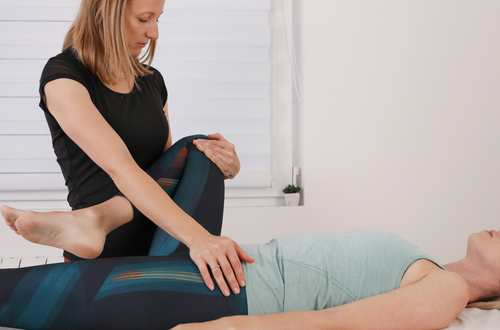
  • Three treatment options for that throbbing pain in your neck

    Three treatment options for that throbbing pain in your neck

    Have a headache that doesn’t cause nausea or light sensitivity? Does it often begin with a throbbing pain in your neck? People who answered yes to these questions may have a nerve issue called occipital neuralgia. 

    Occipital neuralgia occurs when the occipital nerves that run from the top of the neck into the scalp are pinched or inflamed. A study on patients at one headache clinic reveals that 25% of the people surveyed had occipital neuralgia. Physical therapy can help you treat the throbbing neck pain and other symptoms of occipital neuralgia.  

    These three physical therapy treatments can help with throbbing pain in the neck

    Before starting your treatment, your physical therapist will confirm that occipital neuralgia is causing the throbbing pain in your neck. Then, they’ll look for underlying issues that have led to this issue. After gathering this information, your therapist will develop a therapy plan to fit your specific needs. 

    This therapy plan can include treatment options like: 

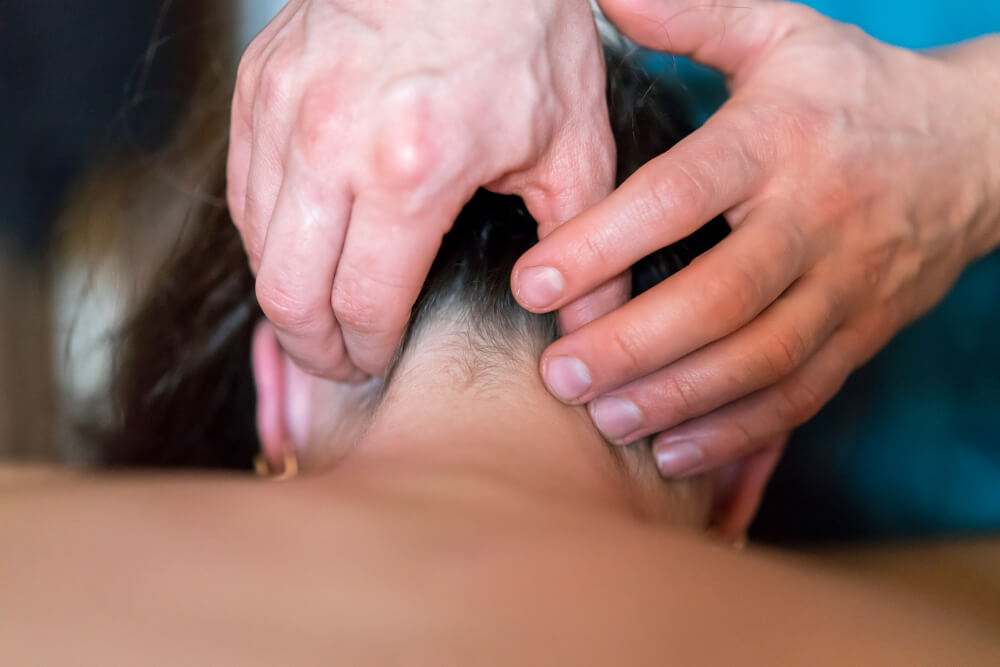
    1. Manual therapy — Mobilizing and manipulating joints and soft tissue is the goal of manual therapy. This category of therapy is applied by the hands of your physical therapist. For occipital neuralgia patients, the therapist typically focuses on the neck and upper back. The results of manual therapy can be very positive; in fact, one study of neck pain sufferers reveals that 75% of the patients who had manual therapy had substantially reduced pain.
    1. Therapeutic exercises — Neck range of motion (ROM) and pain are closely linked. Typically, occipital neuralgia patients have decreased ROM and increased pain. Therapeutic exercises are one way your physical therapist can help decrease your neck pain by increasing neck ROM. 


    A study on neck and back pain patients shows that therapeutic exercises helped improve: 

    1. Myofascial release — An issue that can cause the muscle tension that’s pinching the occipital nerve is myofascial trigger points (MTPs). These are areas of the muscles where scar tissue or knots have developed. Myofascial release involves your physical therapist using their hands to apply pressure to MTPs to break them up. 


    A study on patients with forward head posture shows that myofascial release helped reduce forward head angle by nearly 3 degrees. This reduction means that less stress is placed on the neck muscles, which can lead to decreases in pain. 

    Find help for the throbbing pain in your neck at Whatcom Physical Therapy

    Not sure where to turn for physical therapy for the throbbing pain in your neck? Our team at Whatcom Physical Therapy offers just the type of therapeutic care you need for this type of pain. We can start you off with a free screening that can reveal the source of your pain. Then, our specialists can create a personalized treatment plan for you that’s designed to: 

    • Improve neck range of motion.
    • Reduce tension in neck muscles.
    • Build strength in neck muscles. 
    • Improve your posture. 
    • Decrease neck pain. 

    We even offer virtual therapy sessions that allow you to work with your physical therapist without leaving home. 

    Contact our team today for more information about our neck pain treatment options or to schedule an initial appointment. 
When Was Your Appointment?

We recently changed bill pay providers. Please click the button for the date of your appointment to be directed to the correct online payment portal.